


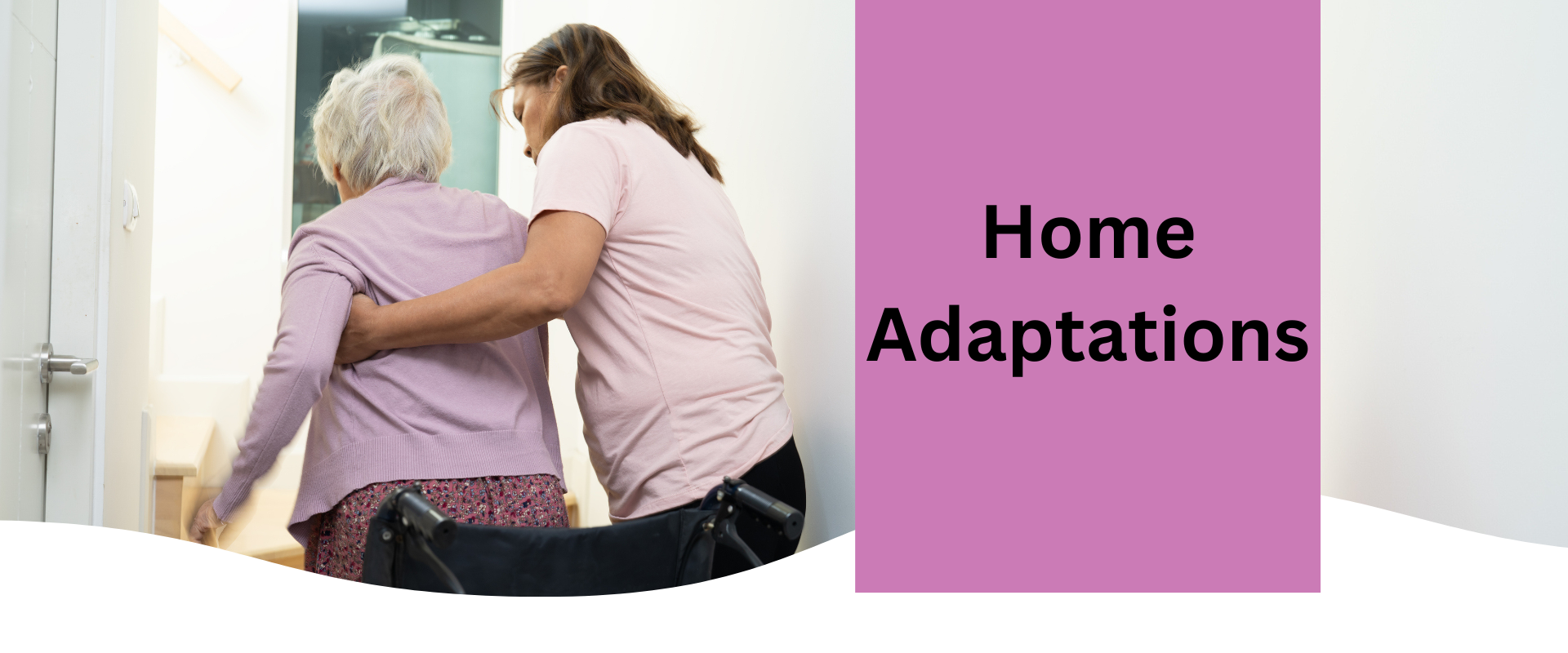
Home adaptations are changes or pieces of equipment that make daily living and mobility tasks easier. For people with serious or life-limiting illnesses, such as those receiving palliative care, they can help maintain comfort, safety, and independence within their own home environment. Following a functional home assessment of individual needs the Occupational Therapist may devise an intervention which could include providing advice, issuing equipment or making recommendations for minor or major adaptations to the home environment. These adaptations range from small, low-cost changes, like fitting rails and providing toilet or bathing aids, to larger and more complex works, such as installing a stairlift. Even small changes can make a big difference to a person’s quality of life.
In Northern Ireland there is home adaptation supports available from government bodies. The way you access this and who provides it depends on your situation. Read the information below to learn more
The first step is to speak to your GP, district nurse, or social worker. They are there to support you and can help get the right services in place. They can refer you on to an Occupational Therapist who will complete an assessment with you and provide recommendations.
In some trusts in NI you can self-refer for an Occupational Therapy Appointment. This can be done by phoning your local social services and making a referral.
Assessment
An assessment is a conversation and review carried out by a health or social care professional (usually an Occupational Therapist) to understand your needs. They will look at how your illness affects your daily life, what difficulties you may have moving around, and what changes could help you stay safe and comfortable at home.
Recommendations
Recommendations are the suggestions given after an assessment. These may include specific mobility aids (like walking frames or wheelchairs bath aids toilet aids, bed aids and kitchen equipment and perching stools), small equipment (like grab rails), or larger home adaptations (such as ramps step realignments or stairlifts). Recommendations are tailored to your personal situation, with the goal of maintaining independence and quality of life.
Referral
A referral is when a professional formally directs you to another service or specialist who can provide the support or equipment you need. For example, you may be referred to an occupational therapist, physiotherapist, or housing adaptations team who can arrange for equipment or changes to your home.
At times the Northern Ireland Housing Executive (NIHE) will make improvements or alterations to a property to suit the needs of the people who live there. To accommodate someone with a disability, a house might need minor or major adaptations. To learn more click here.
Minor Adaptations that do not require referral from a specialist If you are a Housing Executive tenant and wish to apply for a minor adaptation which does not require an Occupational Therapist referral, please click here.
Minor Adaptations that do require a referral If you are a Housing Executive tenant and wish to apply for a minor adaptation which requires an occupational therapy referral, please click here.
Major Adaptations that do require a referral If you are a Housing Executive tenant and wish to apply for a major adaptation please click here.
If you own your own home or are a tenant in the private rental sector, minor adaptation works such as grab rails and stair rails, removing door saddles rehanging doors or provision of stairlifts or interfloor lifts may be available through your local Health and Social Care Trust following assessment and recommendations made by your Occupational Therapist. You can speak to your Occupation Therapist from your Health and Social Care Trust who can provide further information
Major adaptation works like adding a shower room or a bedroom extension will be processed through the Disabled Facilities Grant administered by the Northern Ireland Housing Executive. This grant is means-tested and there is an upper-limit to how much you can get. An Occupational Therapist will work with you to find out what you need before giving recommendations to the Northern Ireland Housing Executive. To learn more click here.
If you privately rent, you will need to get your landlord’s consent to make adaptations. Under the Equality Act 2010 your landlord should make reasonable adjustments to meet your needs, but there are exceptions if you rent privately. For more information contact your local advice service. You can find it here.
If you aren’t eligible for a Disabled Facilities Grant, you can still obtain free information and advice, – for example, about where to buy equipment.
If you need to get your own equipment:
Ask your local council if there is a handyperson service in your area. They could help with small repairs, such as fitting rails.
NI Direct – This website can be used to find specific information such as grants, contacts and funding.
Northern Ireland Housing Executive (NIHE) – The Housing Executive website provides further information about home adaptations.
Marie Curie – Marie Curie website provides further information on home
Advice NI – Advice NI provides information on Local Advice services to contact an Adviser in your area.
NHS – View further information on the NHS website.